June 17, 2026
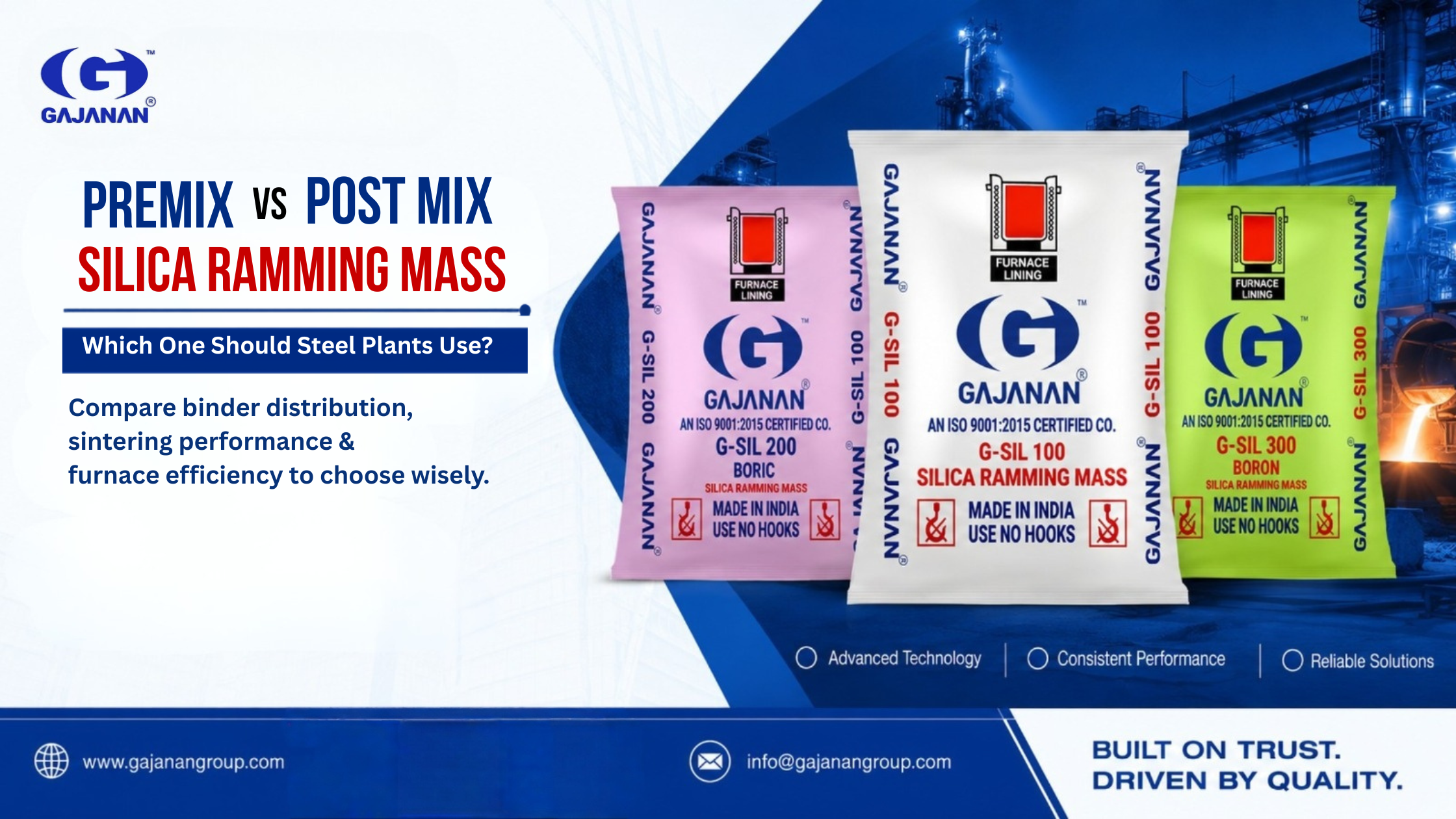
Silica ramming mass is one of the most important refractory materials used in induction furnace lining. But after choosing the right quality of silica ramming mass, steel plants often face another important decision: should they use premix silica ramming mass or post mix silica ramming mass?
This decision is not just about convenience. It affects binder distribution, sintering behaviour, lining consistency, installation time, furnace safety, and overall lining performance.
In simple terms, premix silica ramming mass comes with the sintering aid already mixed into the material by the manufacturer. Post mix silica ramming mass is supplied without the additive, and the steel plant adds the binder or sintering aid at site before lining the furnace.
Both options can work well when used correctly. However, the better choice depends on the furnace size, lining practice, technical control at the plant, operator experience, sintering requirement, and the level of consistency the plant wants.
At Gajanan Group, we manufacture different grades of silica ramming mass, including pure ramming mass, boric premix, boron premix, alpha ladle, and rock bottom grades, so steel plants can choose the suitable grade according to their furnace and operating conditions.
Premix silica ramming mass is a ready-to-use refractory lining material in which the sintering aid is already mixed with the silica ramming mass before dispatch.
The sintering aid may generally be:
In premix material, the manufacturer controls the additive percentage and mixing quality. This helps the steel plant receive a more uniform material where the binder is already distributed throughout the batch.
Premix silica ramming mass is especially useful for plants that want:
For many induction furnace users, premix material is preferred because it reduces the uncertainty involved in manual binder addition.
Post mix silica ramming mass is supplied without the binder or sintering aid already mixed into it. The steel plant adds the required quantity of boric acid, boron oxide, or other additive separately at site before furnace lining.
This gives the plant more flexibility. The plant can adjust the binder percentage based on:
However, post mix material also requires better technical control. If the binder is not weighed properly or not mixed uniformly, the lining may behave unevenly during sintering.
Post mix can be a good option for technically experienced steel plants that have proper mixing systems, trained lining teams, and clear control over additive percentage.
The main difference is where and when the sintering aid is mixed.
Premix silica ramming mass: The binder or sintering aid is already mixed by the manufacturer before supply.
Post mix silica ramming mass: The binder or sintering aid is added by the steel plant at site before furnace lining.
This may sound like a small difference, but in actual furnace practice it can become very important. The quality of binder distribution affects sintering. Sintering affects lining strength. Lining strength affects furnace safety, lining life, and cost per heat.
The binder or sintering aid has to be distributed evenly throughout the ramming mass. If the additive is not mixed properly, the lining may develop uneven sintering.
Some areas may become strongly sintered, while other areas may remain weak. Some pockets may become too glassy, while other zones may not bond properly.
This can create problems such as:
This is one of the biggest advantages of premix silica ramming mass. When the manufacturer has proper mixing equipment and quality control, the additive can be distributed more uniformly than manual mixing done at site.
However, if a steel plant has a strong technical team and proper mixing equipment, post mix can also be handled successfully.
Boric acid is commonly used as a binder or sintering-support additive in silica ramming mass. Its role is to help the refractory lining develop strength during the heating and sintering stage.
During furnace heat-up, the lining must develop a strong sintered hot face before it is fully exposed to regular melting conditions. Boric acid helps support this process by assisting bonding between silica grains.
The quantity of boric acid must be controlled carefully. If the quantity is too low, the lining may not sinter properly. If the quantity is too high, it may create excessive low-melting glassy phase, which can reduce refractory performance at high temperature.
This is why steel plants should never add boric acid casually or by guesswork. The percentage should be based on furnace requirement, melting temperature, lining thickness, material grade, and supplier guidance.
Boron oxide, also known as B₂O₃ or diboron trioxide, is used as a sintering agent in certain silica ramming mass grades.
Compared to boric acid, boron oxide can support faster sintering because it directly participates in the formation of a low-melting glassy phase between silica particles. This glassy phase helps fill the interstitial spaces between silica grains and supports bonding during the sintering process.
Boron oxide-based premix material may be preferred in cases where faster sintering behaviour, controlled bonding, or specific furnace performance is required.
However, boron oxide also needs careful control. The correct percentage is important because excessive glassy phase can negatively affect lining performance. A professional supplier should guide the buyer on which grade is suitable for the furnace.
Gajanan Group offers boron premix silica ramming mass for customers who require this type of grade for suitable induction furnace applications.
Premix material can be made with different types of sintering aid. The two common options are boric premix and boron premix.
Boric premix means boric acid is already mixed with the silica ramming mass by the manufacturer.
It is generally suitable when the steel plant wants:
Boron premix generally refers to silica ramming mass where boron oxide-based sintering support is already mixed into the material.
It is generally suitable when the plant wants:
The final choice should be based on furnace size, temperature, lining area, sintering requirement, and technical recommendation.
Premix silica ramming mass gives several practical advantages to induction furnace users.
Since the additive is mixed at the manufacturer’s end, the distribution is usually more controlled than manual mixing at site. This helps reduce variation between batches.
In post mix, the site team has to weigh and mix the binder correctly. If the measurement is wrong or mixing is uneven, the lining can suffer. Premix reduces this risk.
Premix material saves time because the plant does not need a separate additive mixing step. This is helpful during relining when the plant wants to reduce downtime.
A professional manufacturer can control raw material quality, grain size distribution, binder percentage, and mixing process more systematically.
Premix reduces the need for workers to handle separate boric acid or boron oxide during lining preparation. This can make the lining process cleaner and more organized.
Some plants may not have proper mixers or trained labour for accurate post mixing. For such plants, premix is usually a safer and more consistent option.
Post mix silica ramming mass can also be useful when handled properly.
The plant can adjust the binder quantity depending on furnace temperature, lining thickness, and previous lining performance.
Plants with experienced technical staff may prefer post mix because they can control the additive percentage based on their own furnace practice.
If a plant frequently changes grades, operating temperature, or furnace usage pattern, post mix may give more adjustment flexibility.
Some plants may prefer to choose their own boric acid or boron oxide source. Post mix allows this control.
A steel plant should choose premix or post mix based on its actual operating reality.
Choose premix silica ramming mass if:
Choose post mix silica ramming mass if:
For most steel plants, Gajanan grade premix is always the more practical choice because it reduces manual error and improves consistency with our homogeneous mixing. But for plants with strong technical control, post mix can also perform well.
The best decision is not based on the name “premix” or “post mix.” It is based on which option gives more consistent sintering, safer lining performance, and better cost per heat for your furnace.
Sintering is the stage where the rammed material develops bonding and strength under heat.
In premix material, the sintering aid is already distributed throughout the mass. This can help create more predictable sintering behaviour, provided the material is installed and heated correctly.
In post mix material, the sintering result depends heavily on how well the additive was mixed at site. If some areas have more binder and some areas have less, the lining may not sinter uniformly.
A good sintered lining should have:
This is why additive distribution is not a small issue. It directly affects lining quality.
Even premix material can fail if the plant does not handle it correctly.
Common mistakes include:
Premix reduces mixing error, but it does not remove the need for proper installation and furnace operation.
Post mix requires more discipline.
Common mistakes include:
These mistakes can create uneven lining behaviour. A plant using post mix should create a standard operating procedure for binder weighing, mixing time, batch size, and material handling.
Gajanan Group manufactures silica ramming mass with a focus on high-purity raw materials, controlled grain size distribution, low Fe₂O₃, homogeneous mixing, and moisture-protected packaging.
Our premix and post mix product range includes:
This allows steel plants to choose the grade based on furnace size, lining area, sintering temperature, application temperature, and operating practice.
Gajanan Group’s silica ramming mass is supplied in 50 kg HDPE bags with inner liner for moisture protection and easy handling.
Along with silica ramming mass, Gajanan Group also manufactures Nozzle Filling Compound, Metallurgical Flux, and 90K Mortar for steel plant refractory and metallurgical applications.
Premix and post mix silica ramming mass both have their place in induction furnace lining. The right choice depends on how much control the steel plant has over binder addition, mixing, installation, and sintering.
Premix material is usually better for plants that want consistency, faster preparation, and reduced manual error. Post mix material can be suitable for plants that have experienced furnace teams and want flexibility in binder percentage.
The most important point is this: the binder or sintering aid must be correctly selected, accurately dosed, and uniformly distributed. If this is not controlled, the furnace lining may suffer, no matter how good the silica base material is.
For steel plants, the decision should be based on furnace performance, not habit. A properly selected silica ramming mass grade can support better lining consistency, safer furnace operation, and improved cost per heat.
If you are unsure whether your furnace requires pure ramming mass, boric premix, boron premix, or rock bottom grade, Gajanan Group can help you select the suitable material based on your furnace capacity, operating temperature, lining area, and sintering requirement.
Contact Gajanan Group to discuss the right silica ramming mass grade for your induction furnace.
Premix silica ramming mass is a ready-to-use refractory material in which the binder or sintering aid, such as boric acid or boron oxide, is already mixed by the manufacturer before supply.
Post mix silica ramming mass is supplied without the binder already mixed into it. The steel plant adds the required binder or sintering aid at site before lining the furnace.
Premix is usually better for plants that want consistency, reduced manual mixing error, and faster lining preparation. Post mix can be suitable for experienced plants that have proper mixing equipment and want flexibility in binder percentage.
Premix is preferred because the binder is already mixed under controlled conditions. This can help improve additive distribution, reduce human error, save preparation time, and support more consistent lining behaviour.
The main risk is uneven binder distribution. If the additive is not weighed and mixed properly, the lining may sinter unevenly, creating weak zones and inconsistent furnace performance.
Boric premix silica ramming mass is a grade where boric acid is already mixed with the silica ramming mass by the manufacturer. It is used to support bonding and sintering during furnace heat-up.
Boron premix silica ramming mass generally refers to material where boron oxide-based sintering support is already mixed into the ramming mass. It can support faster sintering behaviour in suitable furnace applications.
No. Premix reduces the need for site mixing, but proper ramming, heating, and sintering practice are still necessary for good lining performance.
Yes, post mix can perform well if the plant has proper binder weighing, good mixing equipment, trained lining staff, and a controlled sintering schedule.
The choice should depend on furnace size, operating temperature, sintering requirement, lining area, and supplier recommendation. Steel plants should discuss their furnace conditions with Gajanan Group before selecting the grade.